
메시지를 남겨주세요
당사 제품에 관심이 있고 자세한 내용을 알고 싶으시면 여기에 메시지를 남겨주시면 최대한 빨리 답변해 드리겠습니다.
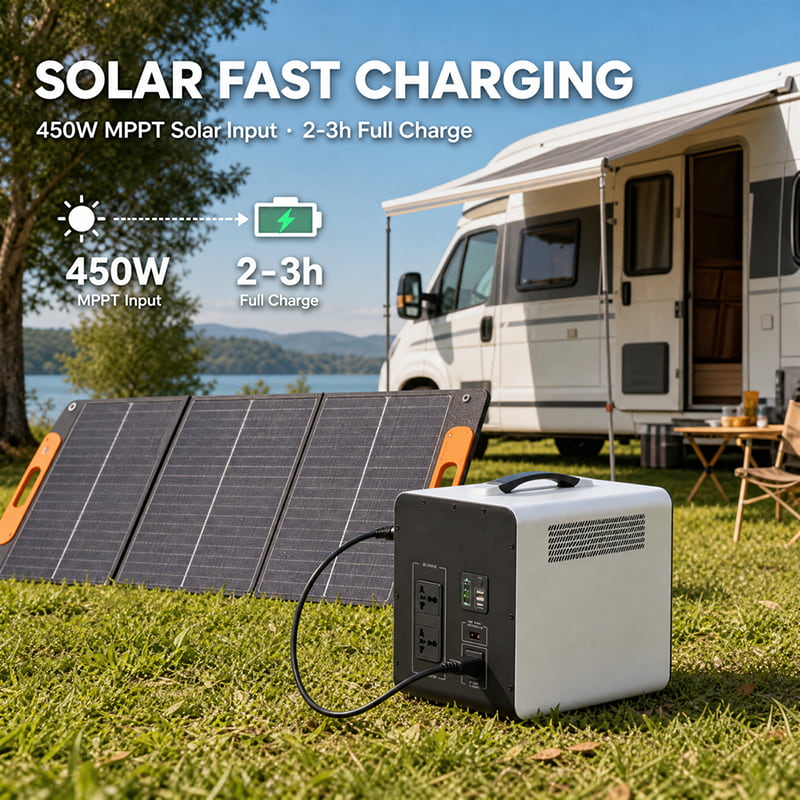
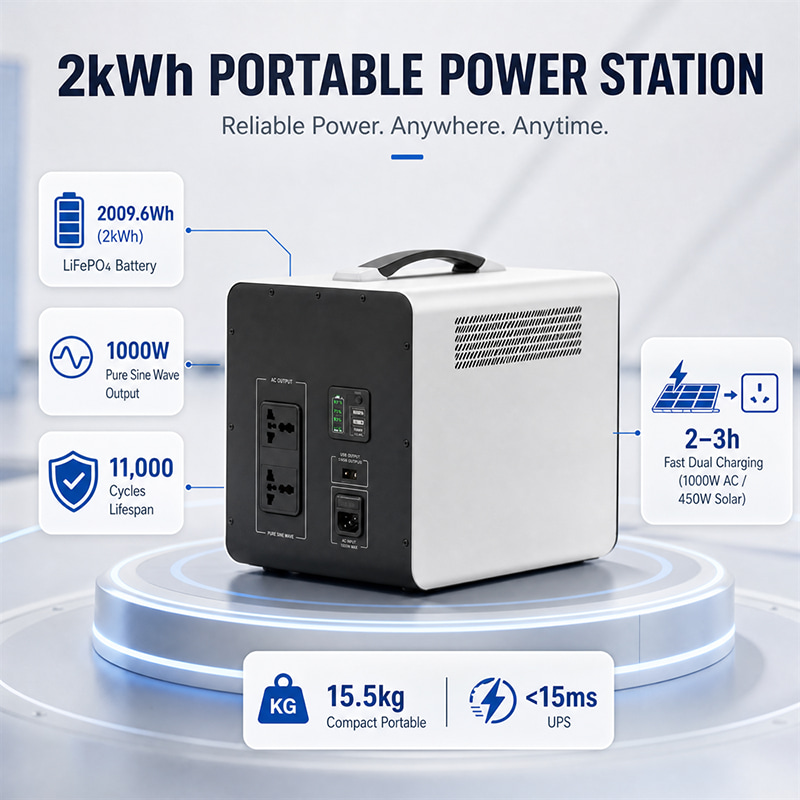
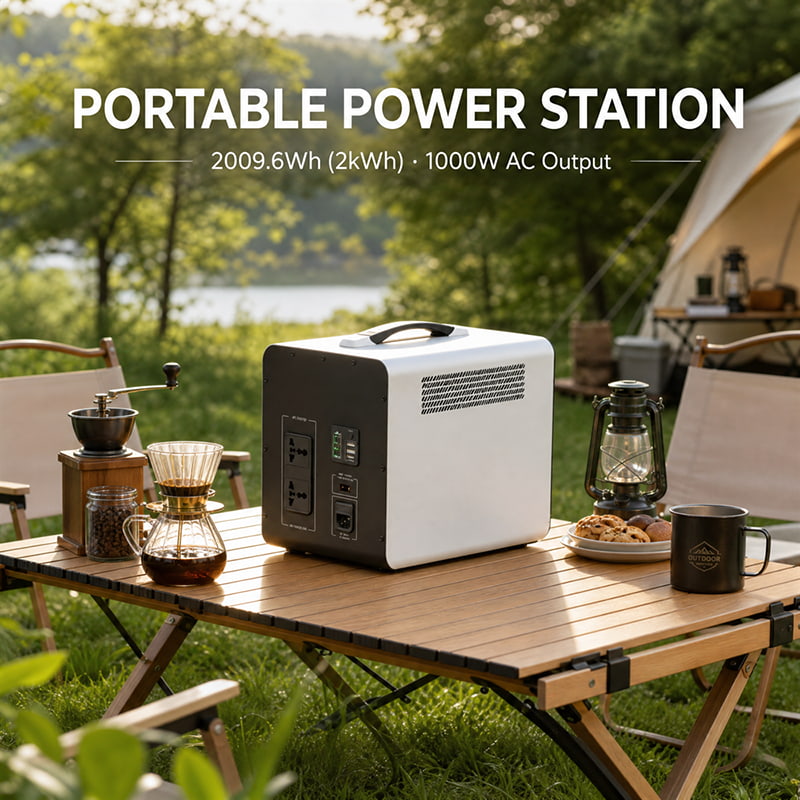
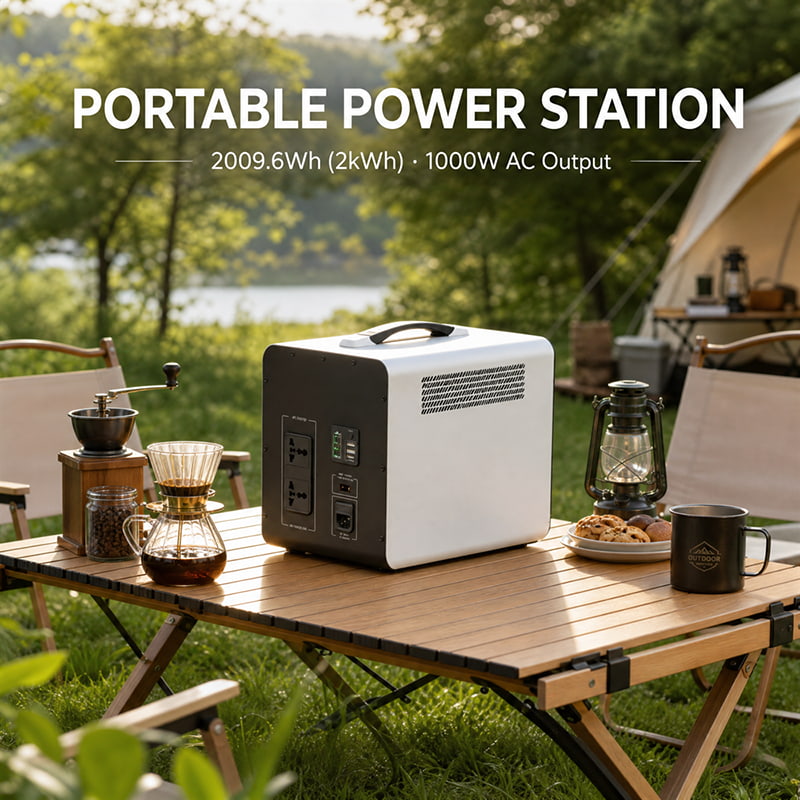
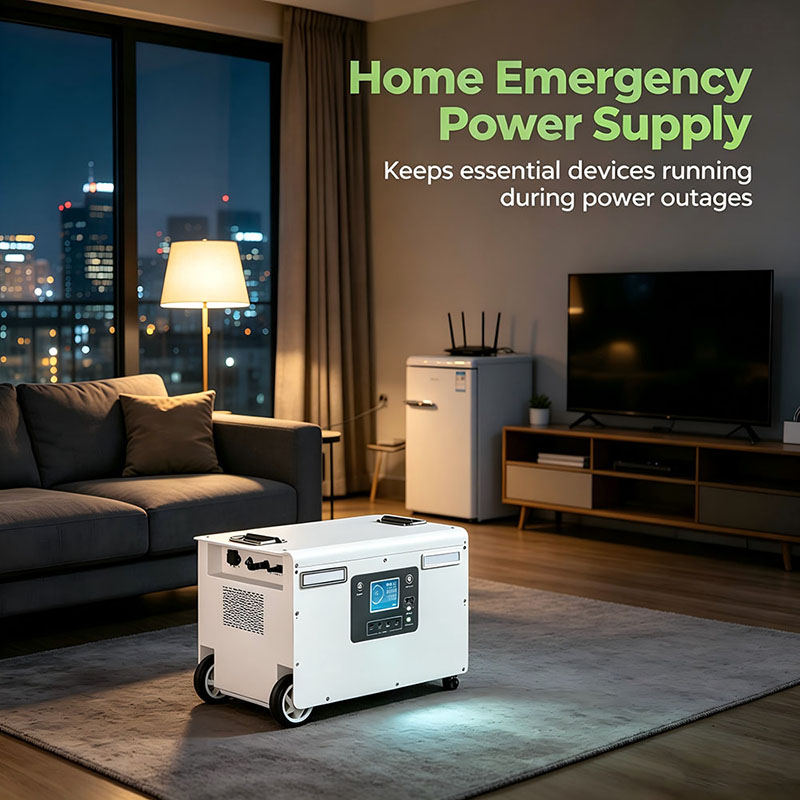
Most nights the power stays on. The night it doesn't, you want something already charged and already plugged in — not a generator you have to wheel out and pull-start in the dark. W2000E is a 2000Wh portable power station that sits against the wall, keeps the router and the fridge alive through an outage, and goes in the boot when you leave. It holds 2009.6Wh in LiFePO4 cells, puts out 1000W of pure sine AC through a 230V socket, and refills from the mains in two to three hours or from 450W of solar.
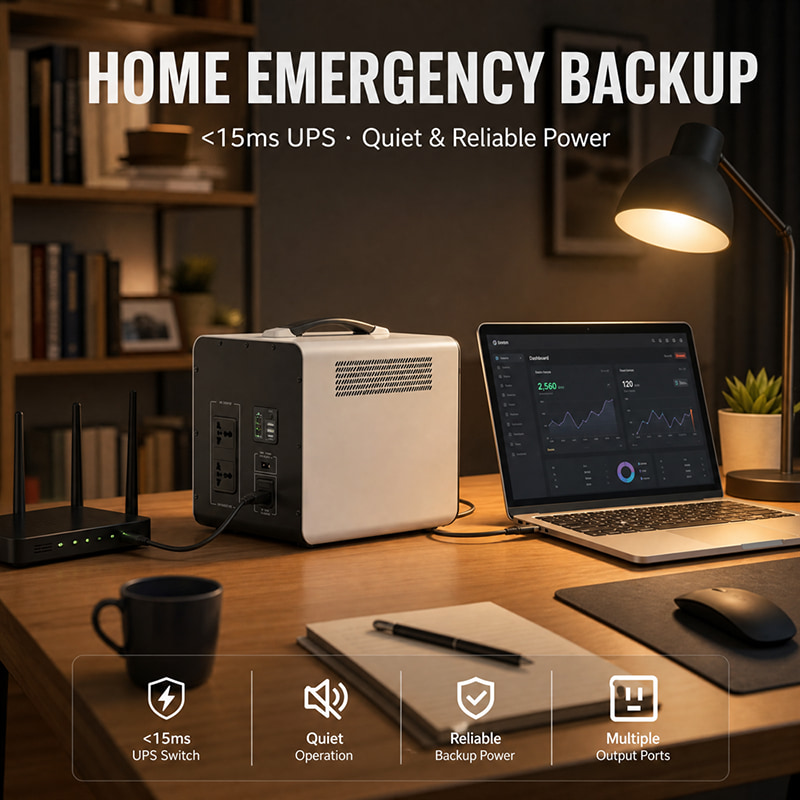
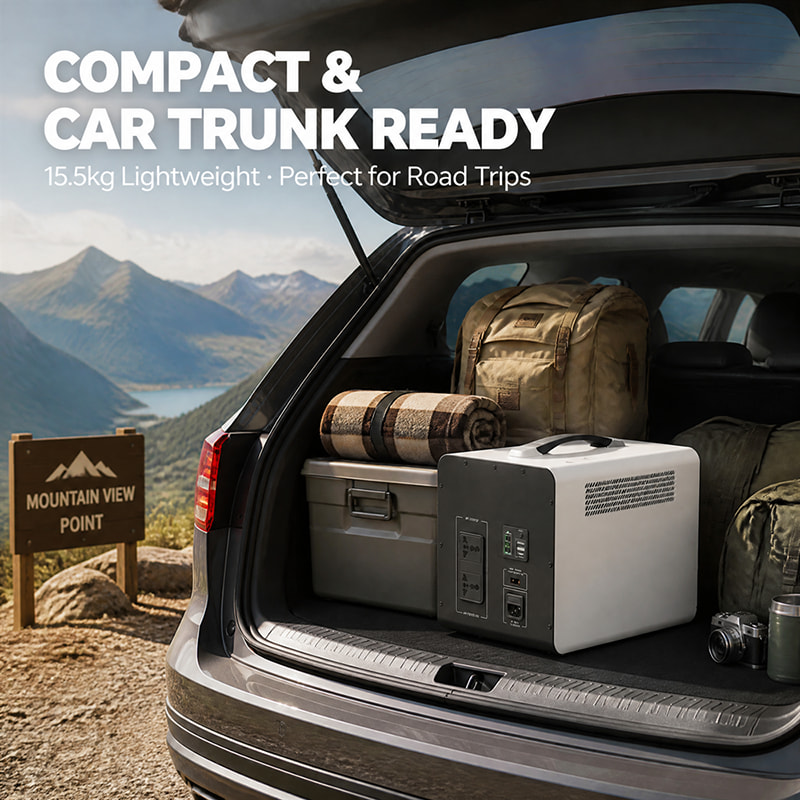
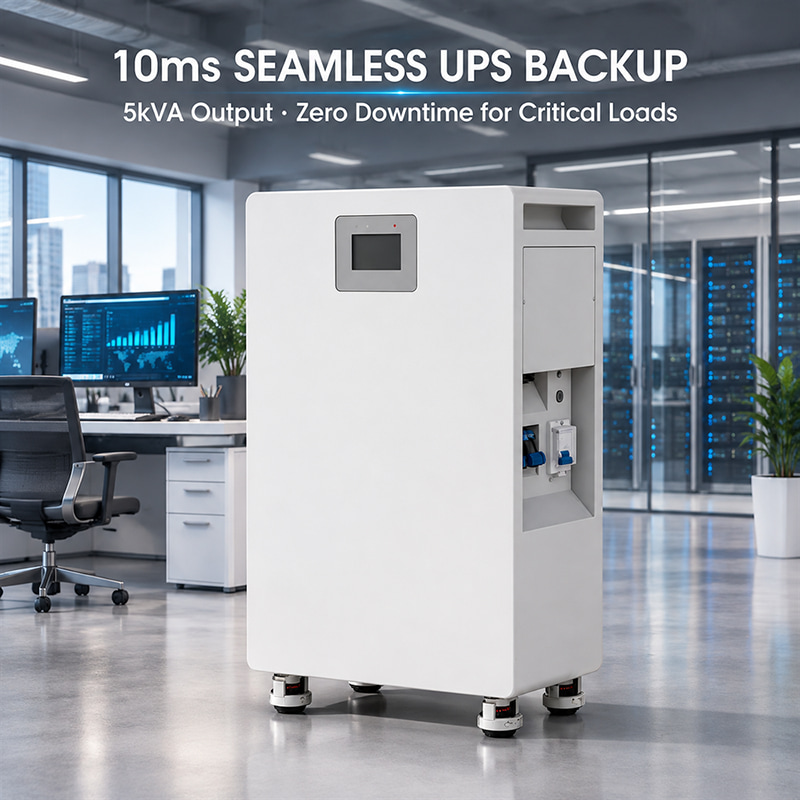
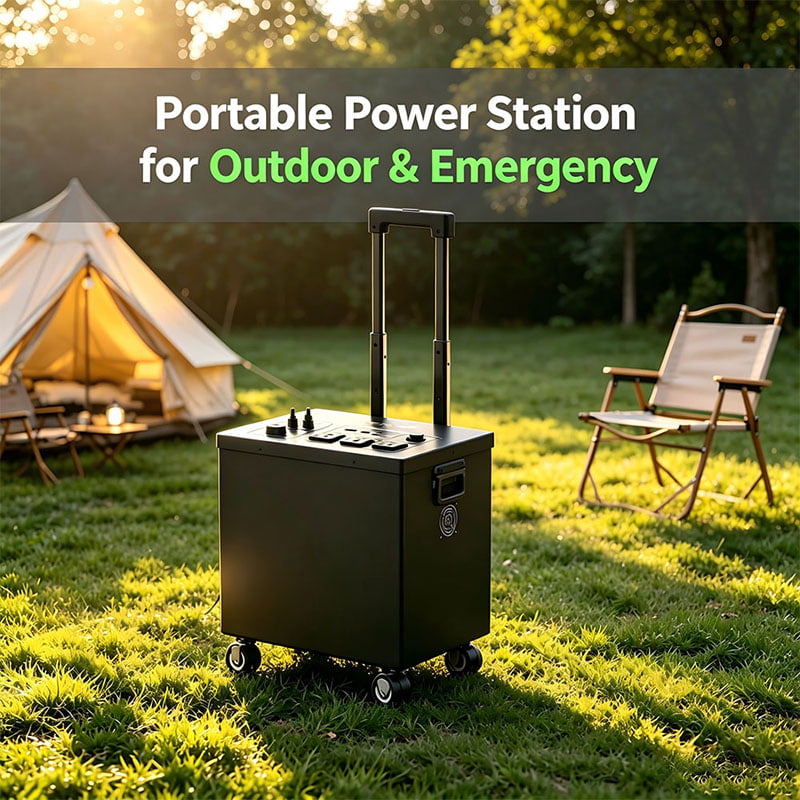
Think of it as a portable energy storage system you can actually carry: 15.5kg in a metal shell, 300 × 180 × 235mm, handle on top. Left plugged in, it works as a solar battery backup system for home use — when the grid drops it takes over in under 15 milliseconds, so the router, the NAS and the desktop never restart.
배터리 용량 :
2009.6Wh배터리 종류 :
2* 314Ah배터리 셀 수명 :
11000cycles@(25℃ ,100%DOD ,0.5P, @70%SOH보호 수준 :
IP20Output Waveform :
Pure Sine WaveBody Dimensions :
L300*W180*H235mmRated AC Input Voltage :
230VA 2000Wh portable power station with 1000W pure sine output — enough for a fridge, a router and a few lights through an outage. Recharges from the wall in 2–3 hours or from 450W of solar, and switches to backup in under 15ms.
Product Advantages
1. The part that matters is that it stays plugged in. Most power stations are something you go and fetch. This one can live against the wall as a 2000Wh portable energy storage system, and when the grid goes it takes over in under 15 milliseconds. Lights dip for a moment; nothing reboots.
2. 1000W pure sine — and the honest limit. 1000W continuous through a 230V universal socket, sine wave, so motors and electronics run the way they do on mains. That covers a camping fridge, a fan, a TV, a CPAP machine, a 1HP pump in short bursts. It will not run a 1.5kW kettle or a 1,200W microwave, and no amount of marketing changes that.
3. It charges on bad power. The AC input takes 90–280V, so it still charges on a line that sags to 90V or climbs toward 280V — thin grids, small generators, the end of a long feeder. Two to three hours at up to 1000W.
4. 450W of solar, two to three hours, one rule. The PV input tracks MPPT from 11V to 55V DC and accepts up to 450W. Two 200W panels in series sit around 46V open-circuit and fill the pack in the same two to three hours under clear sky. Stay under 55V and you cannot get it wrong.
5. LiFePO4, 314Ah, and a cycle figure worth reading properly. 11,000 cycles is the rating at 25°C, 100% depth of discharge, 0.5P, down to 70% state of health — lab conditions, not a promise. What it does tell you is the chemistry doesn't mind sitting full and cycling every day, which is exactly what a 2kWh LiFePO4 portable power station in a hallway does.
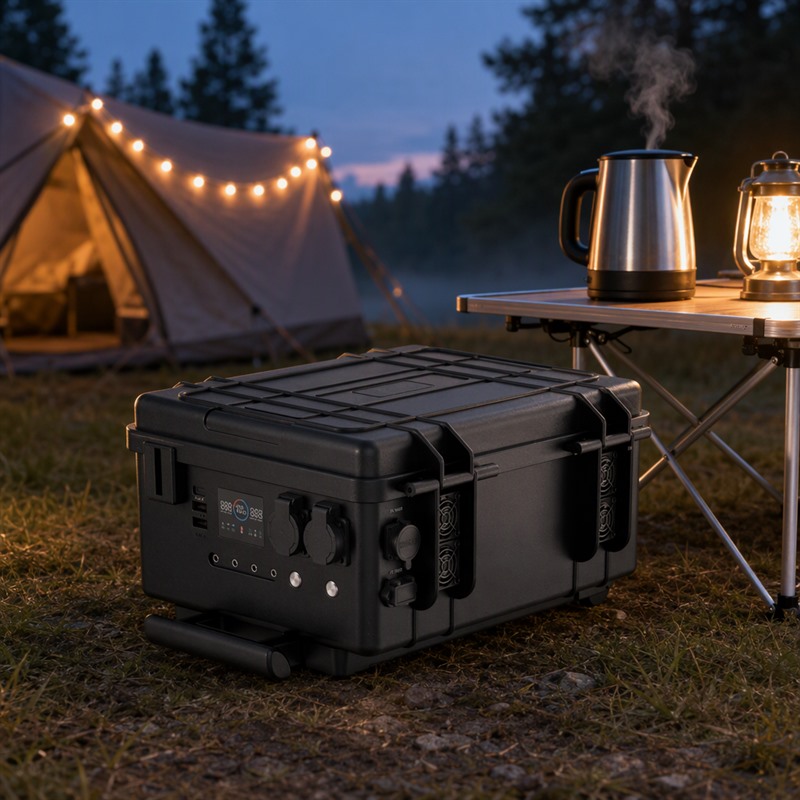
6. 15.5kg of steel, sized for a person. 300 × 180 × 235mm, metal shell, one handle. One person moves it from the hallway to the car without drama; nobody carries it up a hill. IP20 means indoors and dry — a tent with a flysheet, a shed, a van. Not an open truck bed in the rain.

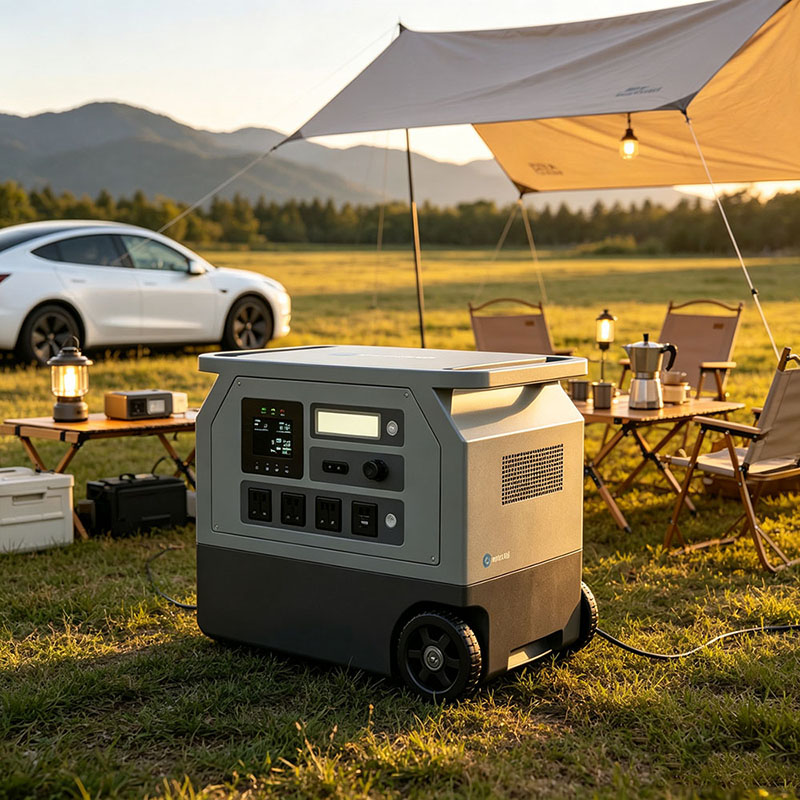
11,000회 이상의 충방전 수명을 자랑하는 고수명 LiFePO4 배터리 팩을 기반으로 설계된 이 3,000W 휴대용 파워 스테이션은 6,000W의 최대 출력으로 순수 정현파를 제공하여 정전 시 냉장고, 전동 공구, 거의 모든 가정용 가전제품을 작동시킬 수 있습니다. 가정용 백업 전원 및 오프그리드 사용을 위해 설계된 이 제품은 고속 AC 충전(약 1시간 만에 0~80% 충전)과 최대 1,200W의 MPPT 태양광 입력 기능을 지원하여 필요한 곳 어디에서든 조용하고 친환경적인 전력을 제공합니다. 확장 가능한 배터리 용량과 UPS급 전환 기능을 갖춘 이 제품은 캠핑족, RV 사용자, 비상 상황에 대비하는 가정 등에서 신뢰받는 확장 가능하고 발전기 없이 사용할 수 있는 에너지 솔루션입니다.
세부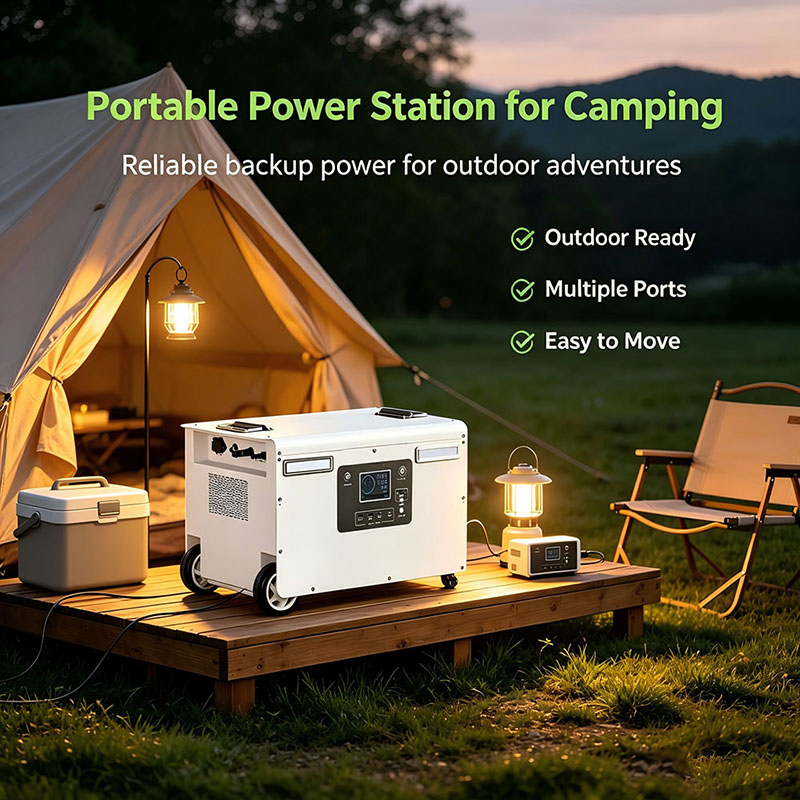
어떤 상황에도 대비하세요 LFP4 3600W 휴대용 파워 스테이션내구성이 뛰어난 LiFePO4 배터리, 빠른 충전 속도, 확장 가능한 저장 용량으로 가정용 비상 전원, 친환경 RV 전력, 그리고 조용한 독립형 에너지원을 제공합니다. 태양광, 벽면 콘센트, 또는 차량용 충전기를 통해 충전할 수 있어 냉장고와 각종 기기를 항상 작동시킬 수 있습니다.
세부
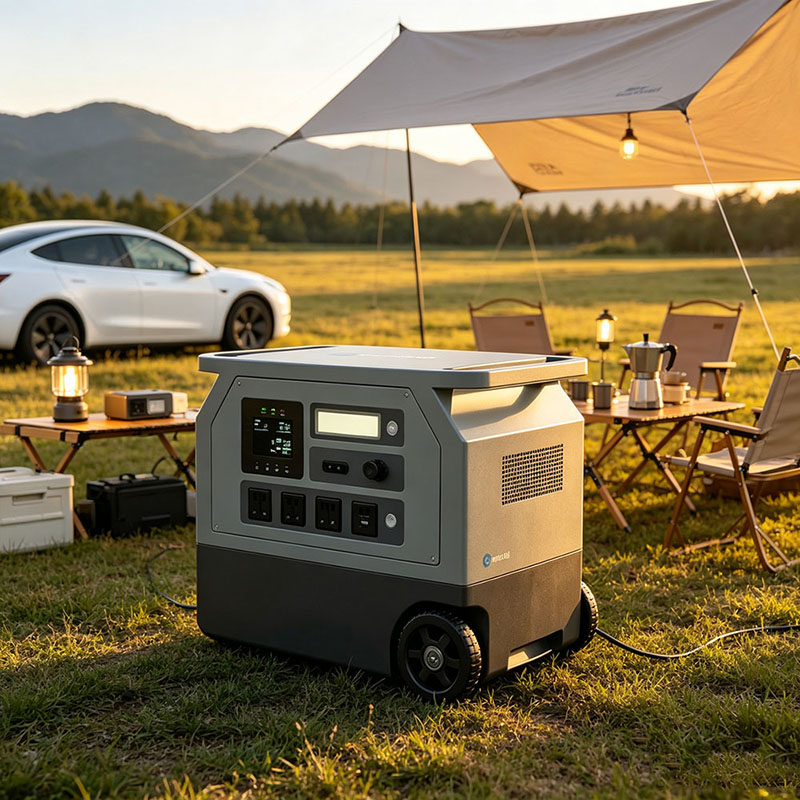
A 휴대용 발전소 휴대용 배터리는 이동 중에도 다양한 기기와 가전제품에 전력을 공급할 수 있도록 전기를 저장하는 소형 충전식 배터리 시스템입니다. 일반적으로 여러 개의 출력 포트(AC, DC, USB)를 갖추고 있으며 벽면 콘센트, 차량용 충전기 또는 태양광 패널을 통해 충전할 수 있어 야외 활동, 비상 전원 공급, 오프그리드 생활에 이상적입니다.
세부
비상용 배터리 휴대용 발전기는 정전, 자연재해 또는 전력망이 연결되지 않은 상황에서 즉시 전력을 공급하도록 설계된 소형 충전식 장치입니다. 대용량 내장 배터리에 에너지를 저장하고 다양한 출력 포트(AC, DC, USB)를 제공하여 의료 장비, 통신 장비, 조명과 같은 필수 기기를 필요할 때 안정적으로 사용할 수 있도록 합니다.
세부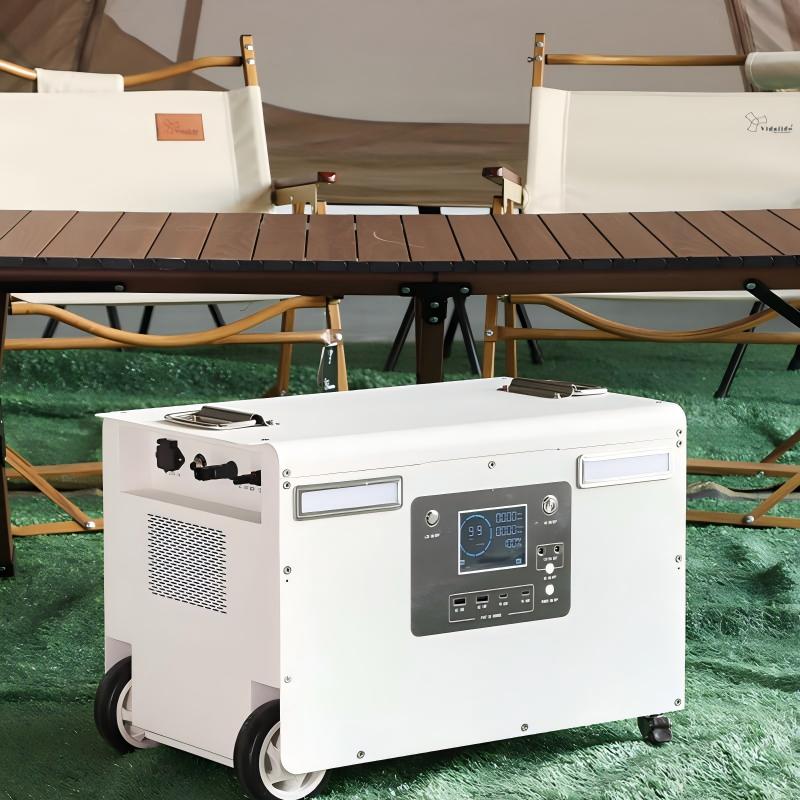
어떤 상황에도 대비하세요. LFP4. 3600W 휴대용 발전기 고용량 LiFePO4 배터리와 고속 충전, 확장 가능한 용량을 결합하여 정전 시 가정용으로 안정적인 전력 백업을 제공하고, RV 캠핑에 친환경 에너지를 공급하며, 오프그리드 생활에 필요한 조용한 전력을 제공합니다. 태양광 패널, 벽면 콘센트 또는 차량용 충전 포트를 통해 충전할 수 있습니다. 냉장고, Wi-Fi 및 필수 기기를 언제 어디서든 작동시키세요.
세부
A 휴대용 발전소 이 제품은 야외 활동, 비상 상황 또는 오지 생활 시 전자 제품 및 가전 제품에 안정적인 전력을 공급하는 소형 충전식 장치입니다. AC, DC 및 USB 포트를 포함한 다양한 출력 옵션과 태양광 패널을 통한 충전 기능을 갖추고 있어 유연하고 친환경적인 에너지 솔루션을 제공합니다.
세부
A 휴대용 발전소 이 제품은 야외 활동, 비상 상황 또는 오프그리드 생활 시 전자 제품 및 가전 제품에 안정적인 전력을 공급하도록 설계된 소형 충전식 장치입니다. 다양한 출력 포트(AC, DC, USB)와 태양광 충전 기능을 갖추고 있어 유연하고 친환경적인 전력 솔루션을 제공합니다.
세부
A 휴대용 발전소 야외 활동, 비상 상황 또는 독립형 생활 중에 전자 제품 및 가전제품에 전원을 공급하기 위한 안정적인 전력 공급원을 제공하는 소형 충전식 장치입니다. AC, DC, USB, 태양광 충전 기능과 같은 다양한 출력 옵션을 갖추고 있어 다재다능하고 친환경적인 에너지 솔루션을 제공합니다.
세부업데이트 정보, 프로모션 및 통찰력을 얻으려면 뉴스레터에 가입하세요.


 IPv6 네트워크 지원

