
메시지를 남겨주세요
당사 제품에 관심이 있고 자세한 내용을 알고 싶으시면 여기에 메시지를 남겨주시면 최대한 빨리 답변해 드리겠습니다.
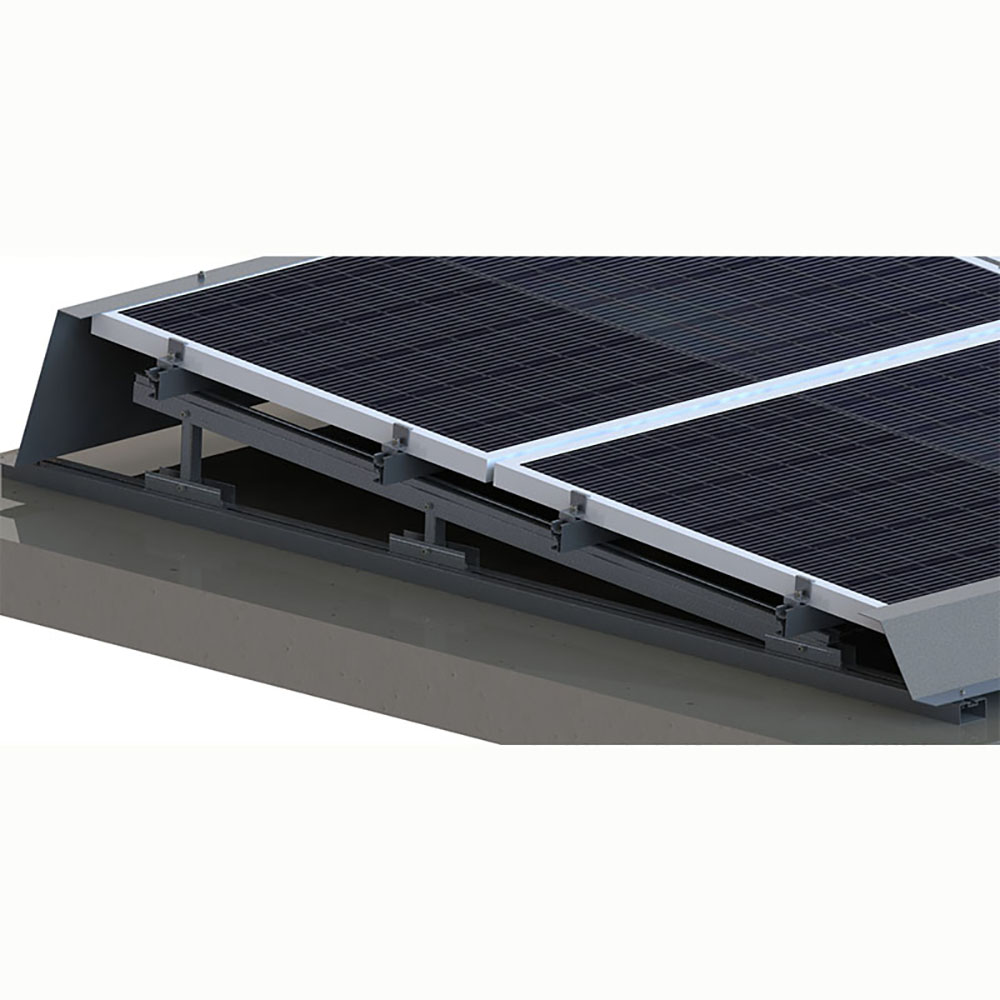
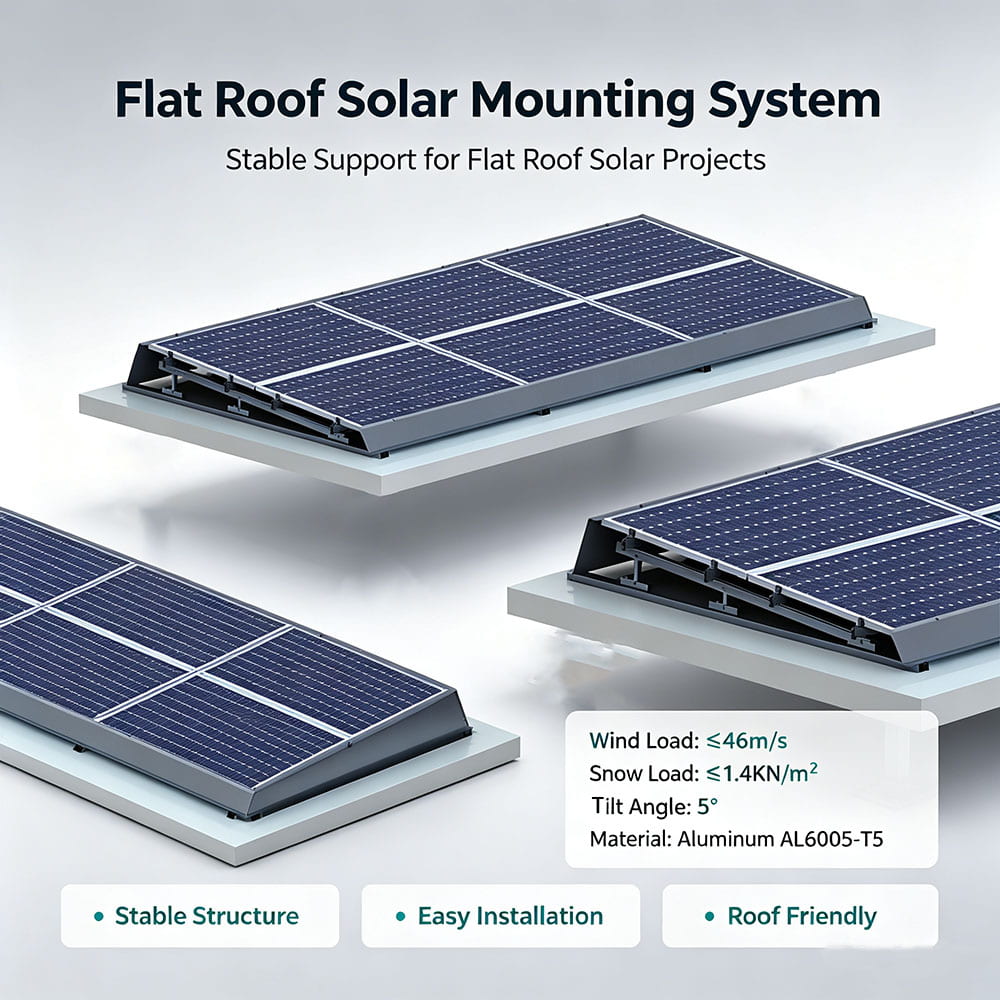
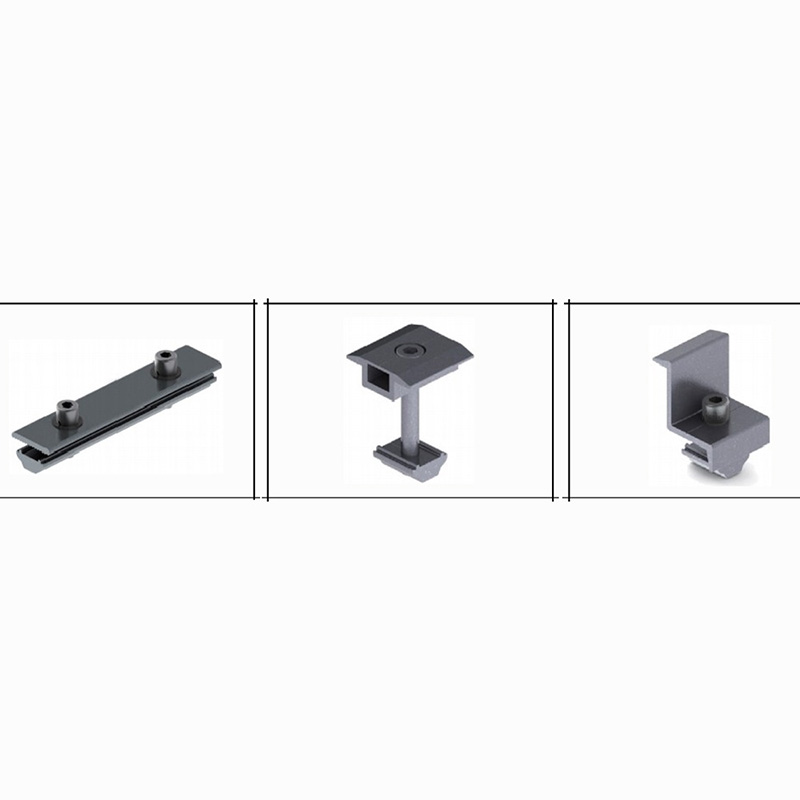
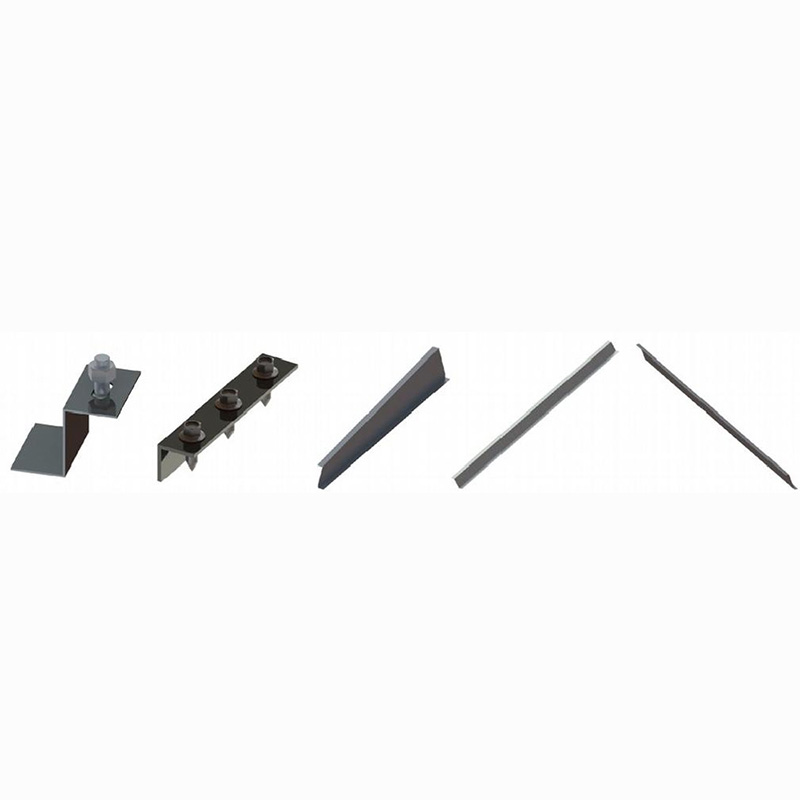
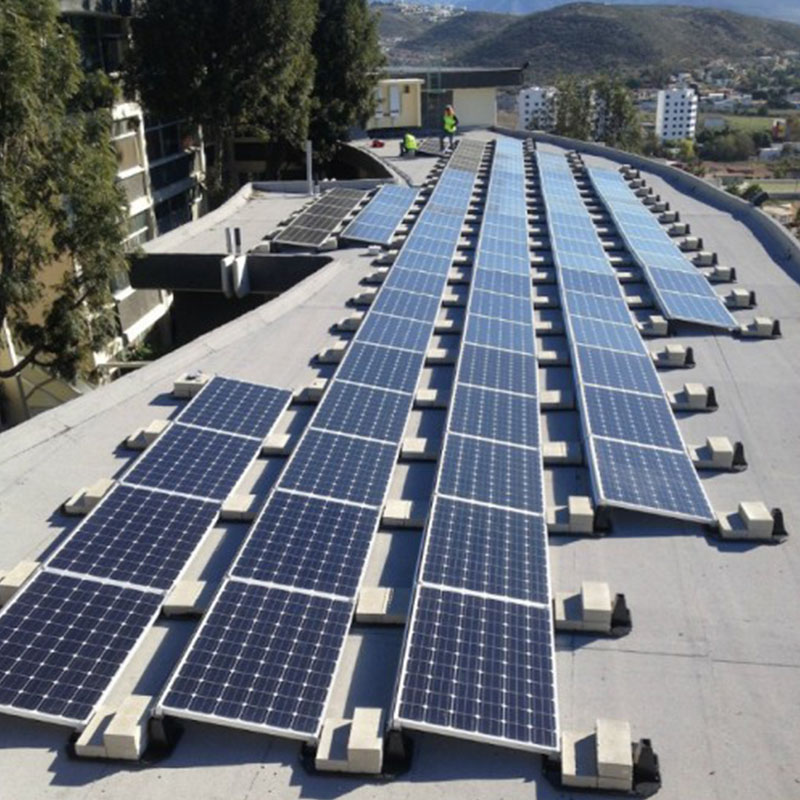
A flat roof gives you area, not pitch, and the usual answer is a tilted frame bolted through the membrane. This one takes the opposite route: the array sits at a fixed 5° on a ballasted frame, held down by concrete blocks rather than fixings, with deflector plates closing the front, back and both sides. Nothing enters the slab. Anodised AL6005-T5, designed against JIS 8955:2017, ten-year warranty.
제품명 :
Solar Fully Enclosed Roof재료 :
Aluminium (AL6005-T5)풍하중 :
≤46m/s적설량 :
≤1.4kn/m2표면 처리 :
Anodized (Aluminium)보증 :
10years서비스 수명 :
25yearsBallast is a trade, and it is worth stating plainly before anyone signs. You give up the ability to choose your tilt, because 5° is what keeps the uplift manageable and the array low; you accept dead weight on a slab that has to be able to carry it; and in exchange you never put a hole in the waterproofing, never depend on a sealant, and never argue with a membrane manufacturer about who voided what. On a roof where the membrane is new, or under warranty, or shared with a tenant below, that exchange is usually worth making.
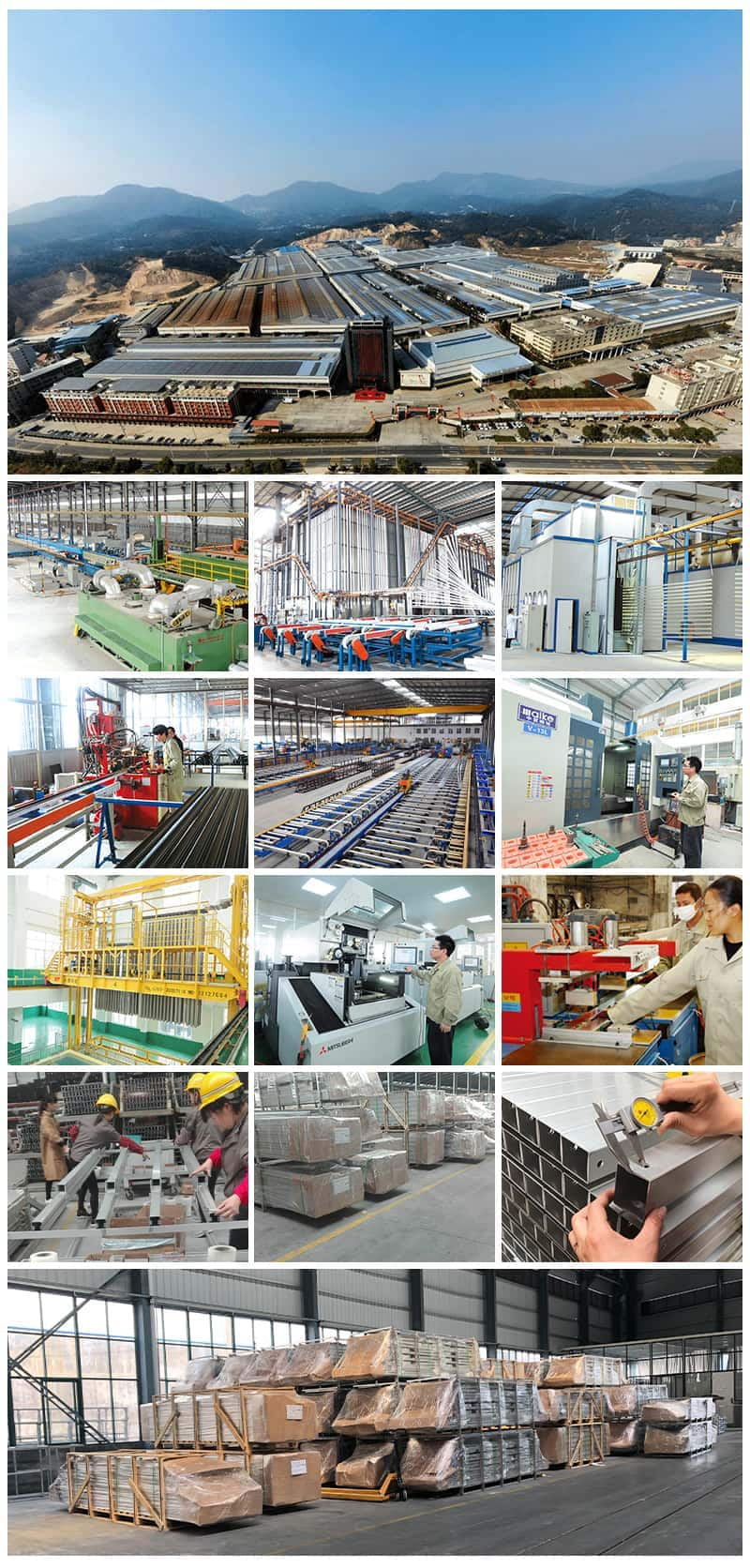
Exhibition Pictures
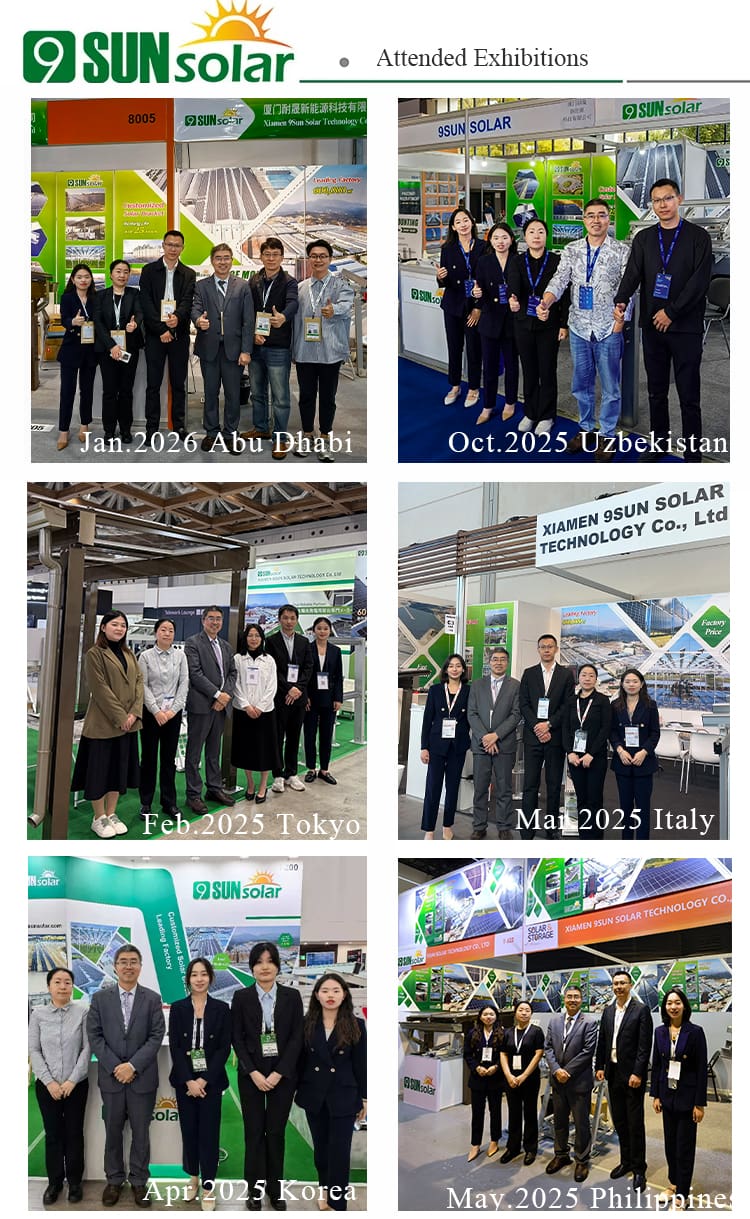
Product Advantages
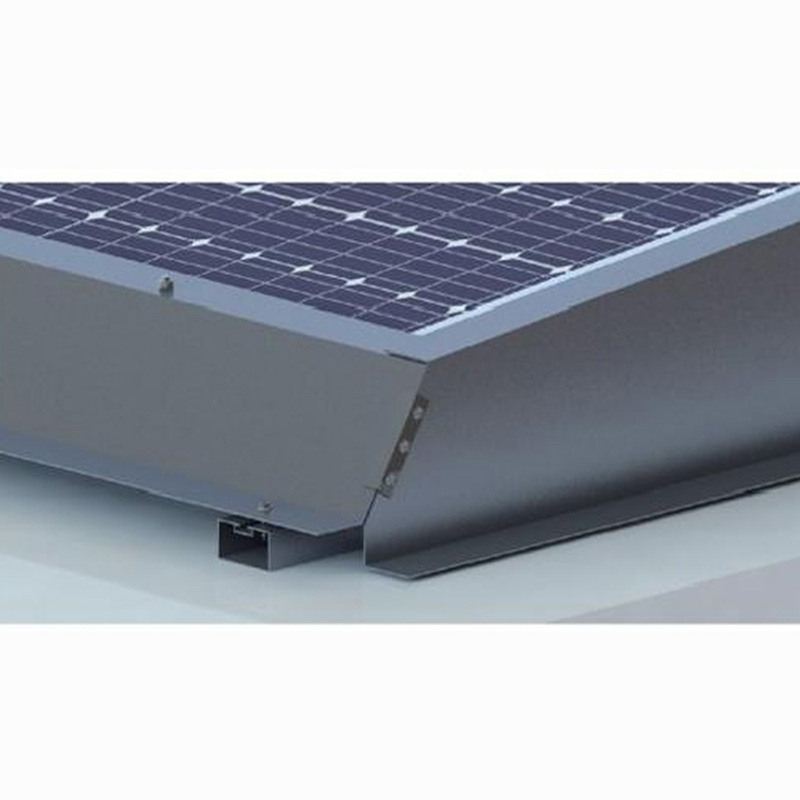
1. Four deflector plates, not two. Front, back and both sides are closed off, which is where a low-profile array normally loses its advantage: open edges let wind get under the modules and lift them. Closing all four faces keeps flow attached over the array instead of pressurising it from beneath, and it is the reason a 5° array can be specified at 60 m/s rather than derated.
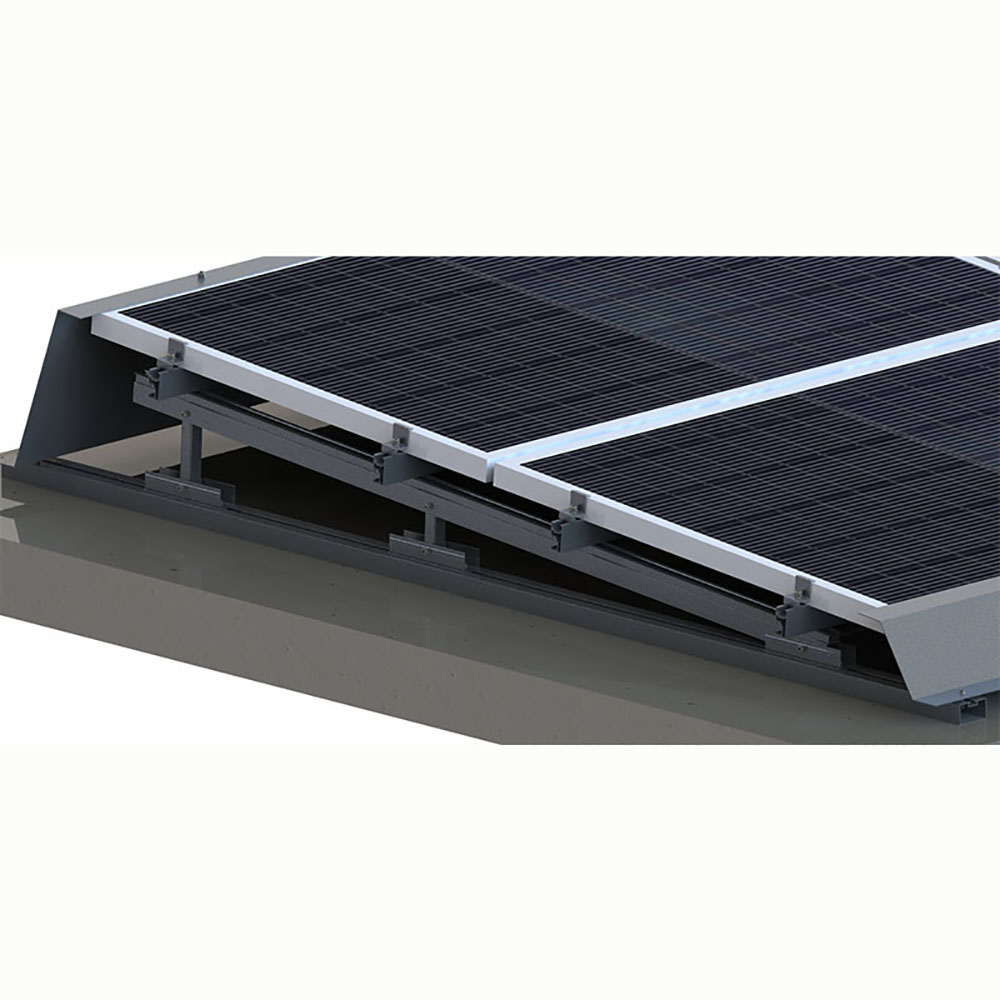
2. Nothing enters the slab. Ballast blocks hold the frame down; there is no anchor, no flashing and no sealant detail in the roof surface. That removes the single most common cause of post-installation leaks in flat roof PV, and it keeps the waterproofing warranty intact — subject, as always, to what the membrane manufacturer will accept.
3. 5° is a wind decision as much as a yield decision. Low tilt cuts uplift and lets rows sit closer together, so a given roof area takes more kWp than it would at 15–20°. The cost is on the yield side: a 5° plane collects less over a year at mid and high latitude, soil does not slide off it, and snow sits where it lands.
4. Weight goes into the slab, evenly, through the frame. The load path is the opposite of a drilled system: instead of a few concentrated anchors, the array bears on the deck across the full footprint — which is gentler on the structure and harder on the structure's load allowance, because the ballast is permanent dead load. That allowance has to be checked, not assumed.
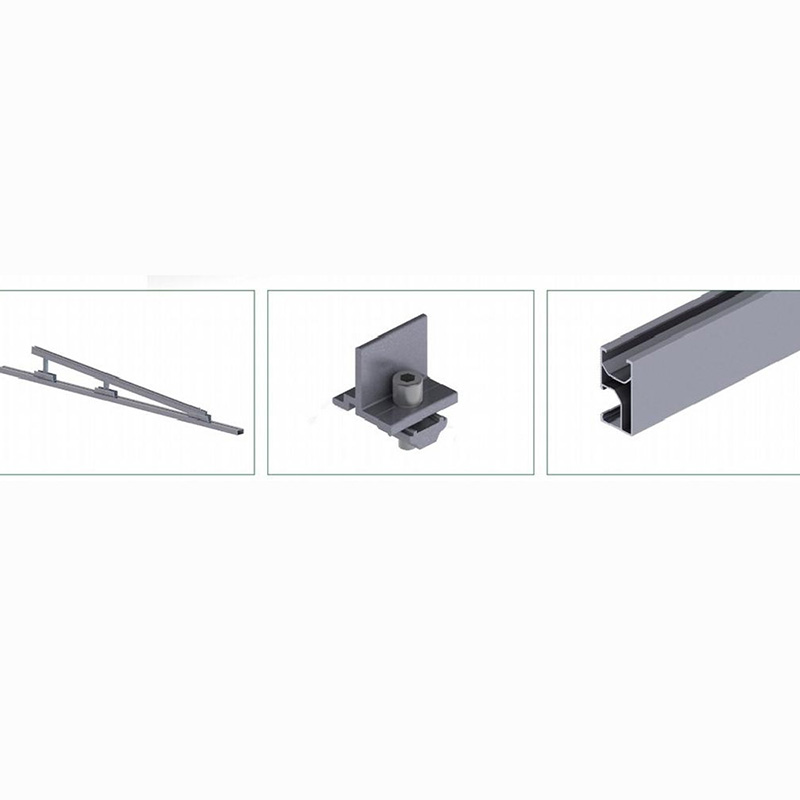
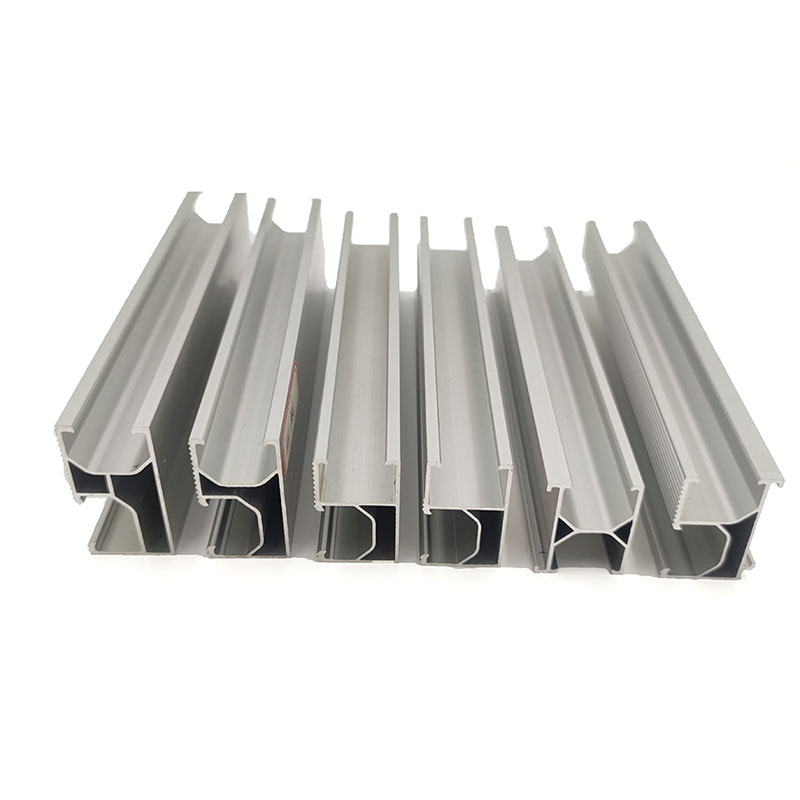
5. Anodised AL6005-T5, silver, black or custom. Extruded aluminium with an anodic finish rather than paint, in the colour the elevation calls for. On a visible roof — a hotel, a school, a building with a planning condition — the finish is part of the approval, and anodising holds colour where powder coat chalks.
6. JIS 8955:2017 as the design basis, 10 years on the structure. The frame is designed against the Japanese PV array structural guide, with 60 m/s wind and 1.4 kN/m² snow stated as the design conditions. That is a design basis, not a certification, and the ballast sizing still belongs to the project.
 a

극한 기후 조건에 견딜 수 있도록 설계된 이 밀폐형 태양광 지붕 브래킷은 100% 누수 방지 기능을 제공하여 지붕과 패널 배선을 안전하게 보호합니다. 녹슬지 않는 알루미늄 합금으로 제작된 이 견고한 마운팅 시스템은 평지붕과 경사지붕 모두에서 뛰어난 안정성을 보장합니다. 주택용 태양광 발전 시스템이든 상업용 프로젝트든, 당사의 내후성 태양광 거치대는 신속한 설치와 장기적인 부식 방지 기능을 제공합니다.
세부
A flat roof gives you area, not pitch, and the usual answer is a tilted frame bolted through the membrane. This one takes the opposite route: the array sits at a fixed 5° on a ballasted frame, held down by concrete blocks rather than fixings, with deflector plates closing the front, back and both sides. Nothing enters the slab. Anodised AL6005-T5, designed against JIS 8955:2017, ten-year warranty.
세부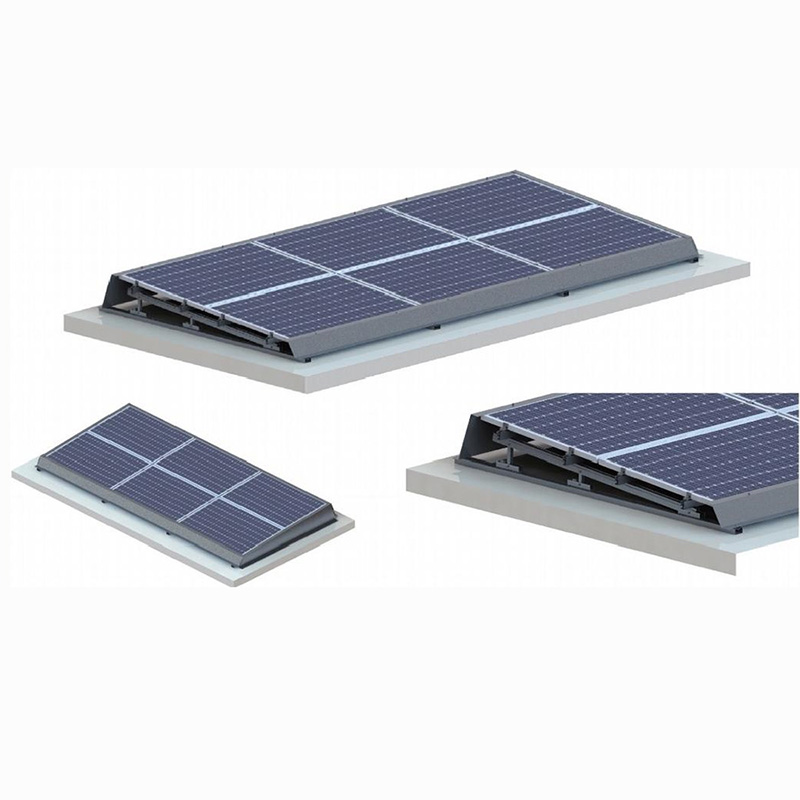
이 장착 시스템의 특징은 다음과 같습니다.바람 저항 및 안전성을 위한 낮은 프로파일의 5° 각도.지붕 손상 없음 - 콘크리트 블록으로 고정됨.방수 기능이 그대로 유지됩니다. 드릴 작업이 필요 없고, 누수도 없습니다.경량 설계로 구조적 하중과 비용을 절감합니다.
세부업데이트 정보, 프로모션 및 통찰력을 얻으려면 뉴스레터에 가입하세요.


 IPv6 네트워크 지원

